

Famous Quakers
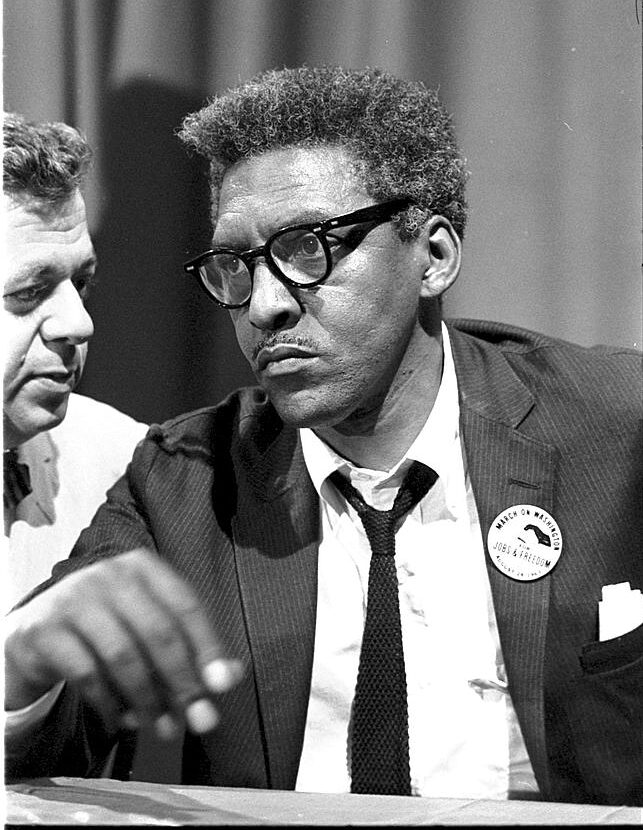
Bayard Rustin
Bayard Rustin was a pacifist, human rights activist and brilliant strategist in social movements for civil rights, socialism, nonviolence, and gay rights. Rustin was the principal organizer of the March on Washington for Jobs and Freedom in 1963 and with Dr. Martin Luther King was one of the founders of the Southern Christian Leadership Conference. He was awarded the Presidential Medal of Freedom posthumously by President Barack Obama. Many historians believe he would have been as famous as Martin Luther King, but being openly gay was a social stigma during his lifetime, which meant he had to stay in the shadows. Rustin lived from 1912-1987. A movie was made about his life in 2023, Rustin.

Alice Stokes Paul (1885-1977)
Alice Paul was a leader of the women’s suffrage movement and one of the foremost strategists of the campaign for the 19th amendment, giving women the right to vote. She suffered police brutality and deplorable prison conditions with great courage. For 50 years she was the leader of the National Women’s Party, which fought for the Equal Rights Amendment.
James Albert Corbett (1933-2001)
“Jim” was the instigator of the national Sanctuary movement in the 1980s. An Arizona rancher, he smuggled refugees from Central America across the Mexican border and connected them with houses of worship across the U.S. willing to break the law by providing them sanctuary. He wrote about his experiences in Goatwalking (1991) and Sanctuary for All (2005). Jim was a descendant of the Blackfoot indigenous tribe. He was featured in a documentary, The New Underground Railroad, produced by Carl and Kathy Hersh, members of the DeLand Quaker Meeting.


Elizabeth Gurney Fry (1780-1845)
Elizabeth Gurney Fry, an internationally respected pioneer in prison reform, was the first woman in history to address the British Parliament. Born in 1780 in Norwich, England, Elizabeth was a member of a prominent Quaker family of bankers. Her life of ease changed directions in 1817 after a visit to see a woman scheduled for execution in the infamous Newgate Prison. She was shocked to see women and their children sleeping on straw, filthy, hungry and with nothing to occupy their time. She introduced kind treatment instead of punishment, set up a school for the children, and taught the women to sew and knit so they had an occupation. She met with Queen Victoria who supported her work. Her reforms and the changes they brought about in the behavior and welfare of the women so impressed British lawmakers that they enacted the 1823 Gaols Act, which used some of her ideas, making it the law to have separate areas for men and women in mixed prisons, and to have women guards for women prisoners. Fry travelled widely, meeting heads of state to share her ideas, initiating a global movement for prison reform.
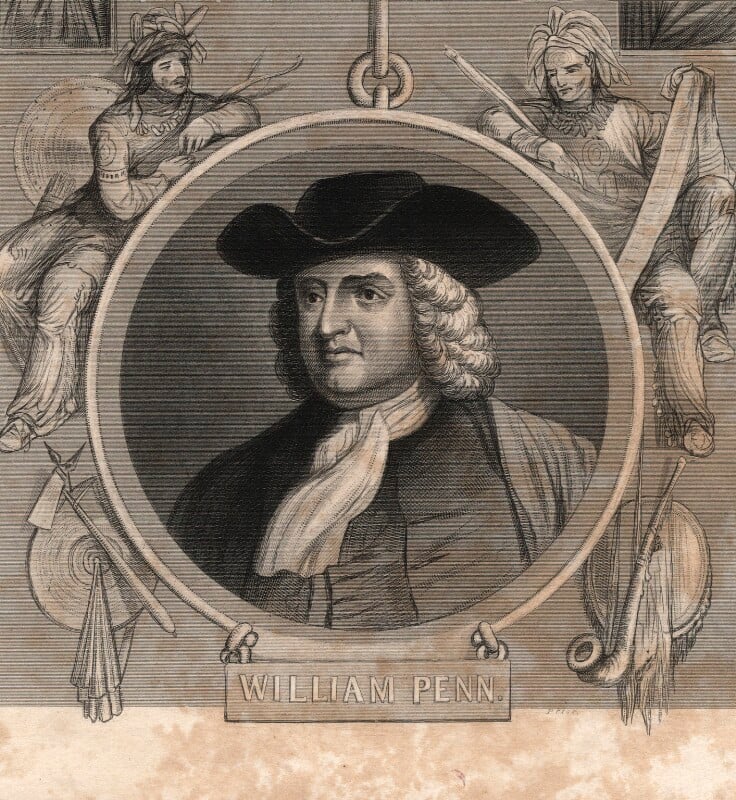
William Penn (1644-1718)
William Penn, son of a British admiral, was an English writer, religious thinker and influential Quaker who received a British land grant in the American colony and founded the Province of Pennsylvania. He negotiated with the Lenni Lanape indigenous tribe to buy the land from them, unprecedented in its day. He gained their respect and was much honored by them even after his death. Penn urged the English colonies to unite. His framework for the government of the Pennsylvania colony inspired the writers of the Constitution of the United States.

George Fox (1624-1691)
George Fox, considered the founder of the Religious Society of Friends (Quakers), did not set out to create a new religious sect but to find a deeper relationship with God than he experienced with the Church of England. In 1652, while praying on a large hilltop in Lancashire, England, he heard a voice telling him of a divine Light within each person that enabled direct communication with God without the intercession of clergy. He started preaching what had been revealed to him and within a few years he had convinced 50,000 followers. Quakers, as they were later known, rejected religious hierarchy and refused to fight in wars. They were imprisoned and suffered severe persecution for their beliefs. Today Quakers are known for their pacifism and leadership in the abolition of slavery, prison reform, women’s rights, the civil rights movement, and advocacy for peace and human rights internationally.
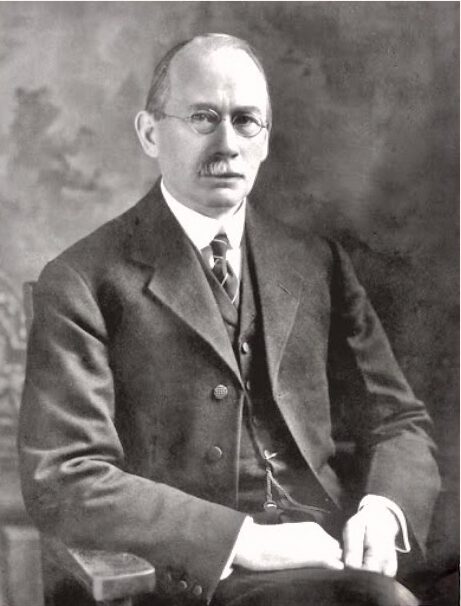
Rufus Matthew Jones (1863-1948)
Rufus Jones was a Quaker leader, mystic, professor, and activist. born in Maine. One of the most influential Quakers of the 20th century, Jones was widely published, was one of the founders of the American Friends Service Committee, and helped start the Quäkerspeisung feeding program after World War I, which kept many Germans from starving. In 1947, the AFSC was awarded the Nobel Peace Prize for their pioneering relief work after both World Wars and for their consistent promoting of nonviolence.
In 1938, he and two other Quakers went to Germany to request permission from the Gestapo for the AFSC to begin a program to provide emergency relief for Jews in Germany after Kristallnacht, the Night of Broken Crystals [windows]. Rufus Jones wrote about their extraordinary encounter, “Our Day in the German Gestapo,” which was published in The American Friend in 1947.

To donate to DeLand Quaker Meeting:
Make your check payable to DeLand Quaker Meeting Inc. and mail to P.O. Box 4074, DeLand, FL 32721.